
Policy update
Delhi Solar Subsidy 2026: The Complete ₹78,000 Guide
Delhi solar subsidy 2026 explained: ₹78,000 Delhi subsidy, ₹78,000 PM Surya Ghar and a ₹19,000 top-up. Slab-wise tables, eligibility and how to apply.
Read the guide →
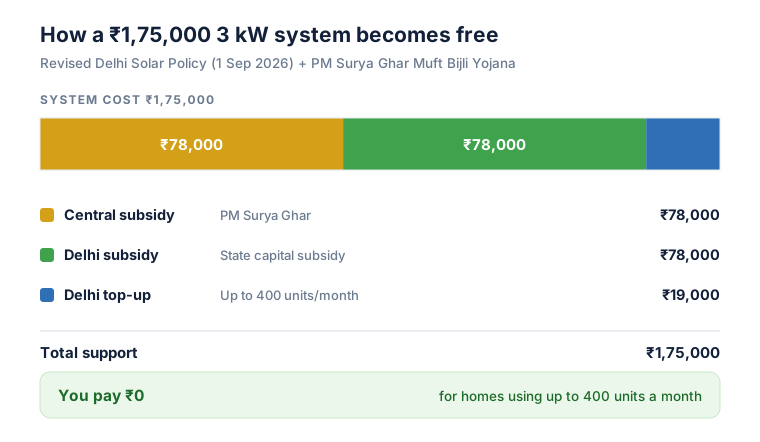
The question we hear most in Delhi is simple: what does a 3 kW solar system cost? In 2026 the answer is different from anything before it — because after subsidy, for most households, that number is ₹0.
| Up to 400 units | Over 400 units | |
|---|---|---|
| Listed system cost | ₹1,75,000 | ₹1,75,000 |
| Central subsidy (PM Surya Ghar) | − ₹78,000 | − ₹78,000 |
| Delhi Government subsidy | − ₹78,000 | − ₹78,000 |
| Delhi top-up | − ₹19,000 | — |
| Net price to you | ₹0 | ₹19,000 |
Note that ₹1,75,000 is the listed cost in the Delhi Government's policy documents. An actual quotation can vary a little with panel brand, inverter, structure height and site conditions.
A properly built 3 kW rooftop system includes:
If a quotation leaves out earthing, the lightning arrestor or net meter filing, it isn't cheaper — it's incomplete.
Delhi gets good sunlight through the year. A practical rule of thumb:
The Delhi Government's own estimate is in the same range: about 200 units of self-consumption saved plus about 100 units exported to the grid.
Seasonal variation matters: March to May is peak generation; the monsoon (July–August) runs roughly 25–30% lower; and December–January drops noticeably because of Delhi's smog and fog. Judge the system on the annual average, never a single month.
| Your consumption | Est. monthly benefit (3 kW) | Per year |
|---|---|---|
| 0–200 units | ~₹950 | ~₹11,400 |
| 201–400 units | ~₹1,659 | ~₹19,908 |
| Over 400 units | ~₹2,143 | ~₹25,716 |
Heavier users benefit more, because their tariff slab is higher and exported surplus is counted at ₹6.50 per unit.
Solar panels normally carry a 25 to 30 year performance warranty. Extending today's monthly benefit across 25 years:
| Consumption slab | Your investment | Est. 25-year benefit | Payback |
|---|---|---|---|
| 0–200 units | ₹0 | ~₹2.85 lakh | Immediate |
| 201–400 units | ₹0 | ~₹4.98 lakh | Immediate |
| Over 400 units | ₹19,000 | ~₹6.43 lakh | ~9 months |
These are conservative figures, because two things are left out:
On the other side of the ledger: panels lose roughly 0.5–0.8% efficiency a year, and the inverter may need replacing at 10–15 years (roughly ₹25,000–₹40,000). Cleaning and AMC cost a little annually. Even after all that, the net picture stays strong.
| System | Roof needed | Monthly generation | Best for |
|---|---|---|---|
| 2 kW | ~180 sq ft | ~240 units | Smaller roofs, usage up to 200 units |
| 3 kW | ~270–300 sq ft | ~360 units | Most popular — best value with the subsidy |
| 5 kW | ~450–500 sq ft | ~600 units | Large homes with heavy AC use |
| 10 kW | ~900–1,000 sq ft | ~1,200 units | Big houses, shops, small commercial |
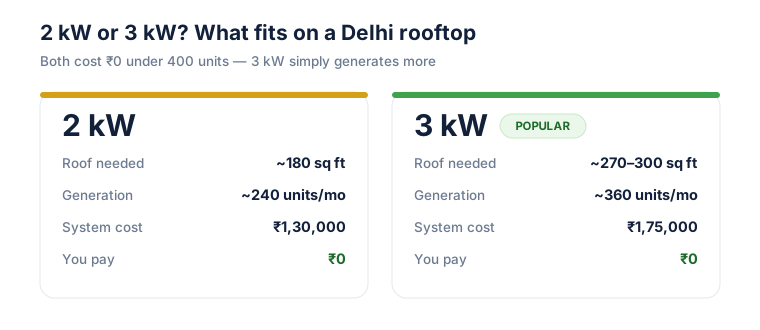
The subsidy structure is most generous at 2 kW and 3 kW. At 5–10 kW the per-kW subsidy is proportionally lower, though it still stacks up well for heavy consumers.
If someone quotes far below ₹1.75 lakh, ask:
This system has to stand on a Delhi rooftop for 25 years through heat, storms, rain and pollution. Saving ₹10,000 on a flimsy structure or an unwarranted panel is a 25-year risk.
Delhi solar subsidy 2026 explained: ₹78,000 Delhi subsidy, ₹78,000 PM Surya Ghar and a ₹19,000 top-up. Slab-wise tables, eligibility and how to apply.
Delhi free solar panel scheme 2026: homes using up to 400 units a month get a 3 kW rooftop system fully covered by subsidy. Eligibility, the catch, and how to apply.
The official Delhi Solar Portal rule: choosing a PM Surya Ghar empanelled vendor is not mandatory. Delhi subsidy and GBI apply to all net meter installations.
How to apply for solar subsidy in Delhi: PM Surya Ghar registration, Delhi Solar Portal application, document checklist, net metering and realistic timelines.
Keep your electricity bill handy and call us — in five minutes we'll tell you your subsidy, what you'd pay and what you'd save.